Skip to content
English
  • There are no suggestions because the search field is empty.

Peak Season: Why it may take longer right now and what you can do

Peak season in transport means: a high volume of freight meets comparatively limited available capacity. As a result, pick-up, handling, and delivery operations are more heavily utilized, and processes become less predictable and harder to plan reliably.

Typical timeframe: April to June
 
In many years, a typical peak period in road freight transport falls between April and June. During this time, several short working weeks, public holidays, and seasonal demand spikes often cause transport capacity to become scarce more quickly than usual.
 
Transport barometer: Why peak season is so noticeable
We plan capacity with our network well in advance, but even at an early stage, capacity is not unlimited. While around 90% of our transports run smoothly—significantly above what overall market availability might suggest—the impact of peak season naturally still affects our shipments as well.
 
undefined-4


O
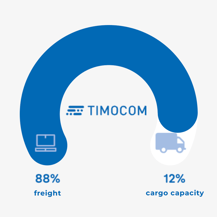
ne indicator of market conditions is the TIMOCOM Transport Barometer, which reflects the ratio of freight offers to available loading capacity. During peak periods, this ratio can shift dramatically. Example: at times, 88% freight was reported against only 12% cargo capacity. This means very high demand meets comparatively limited available capacity. In practice, this can lead to longer waiting times and less predictable time slots.

A note from us:
 
All freight forwarders are currently operating in a transport market with limited freight capacity. Therefore, we have to plan together within a finite amount of available loading space.
Due to the additional outbreak of the Iran war, many companies are building up their inventories as a precaution to safeguard against a possible further escalation of the situation. However, this short-term increase in demand can only be absorbed to a limited extent by the European transport market.
This can result in individual shipments being delayed by a few days before they are dispatched. Even though this is not ideal, we kindly ask for your understanding in such cases.
Together with our network and you as our customer, we are working closely to achieve the best possible outcomes. Thank you for your understanding.
DSC_7806-Basti-blau-q

Bastian Lütkemeyer
Head of Operations

Typical effects of peak season
During peak season, the following impacts may occur in particular:

  • Pick-ups may be delayed in individual cases. Once the goods are in transit, transport usually proceeds as normal.
  • Time slots and scheduling are less reliable than usual, as capacities can fluctuate at short notice.
  • Especially during short working weeks and holiday periods, bottlenecks may occur more frequently because fewer working days are available for pick-up, handling, and delivery while demand remains high.
 
Platform notice
During peak periods, you will see an information banner in the platform that alerts you directly at the time of booking to possible seasonal restrictions.
 
What you should do now:
 
Proactively manage expectations
Talk to your customer early about realistic transit times (allowing an extra 1–2 days) and potential influencing factors. Surprises are usually the biggest issue. Setting clear expectations upfront reduces follow-up questions and helps keep the process calm and predictable.
 
Plan buffer time
Given the current market situation, please always allow for additional buffer time.
 
Reconsider additional requirements
By removing add-on services, you can significantly increase how quickly your shipment can be scheduled.
 

Example: If you can do without pallet exchange or more complex loading/unloading options such as tail-lift service or a pallet truck, we can usually plan your transport much faster.

Coordinate fixed dates in advance
If a fixed date must be met, please coordinate this with us before booking. Without prior coordination, fixed dates generally cannot be guaranteed during peak periods.

Consider courier transport as an alternative
If time-criticality or reliability is the top priority, a courier service may be the right alternative—for example, when working with tight time windows or when a fixed delivery date must be met.